
 OPEN SCHEMATIC ↗
VESSEL / CONCEPT DRAWING
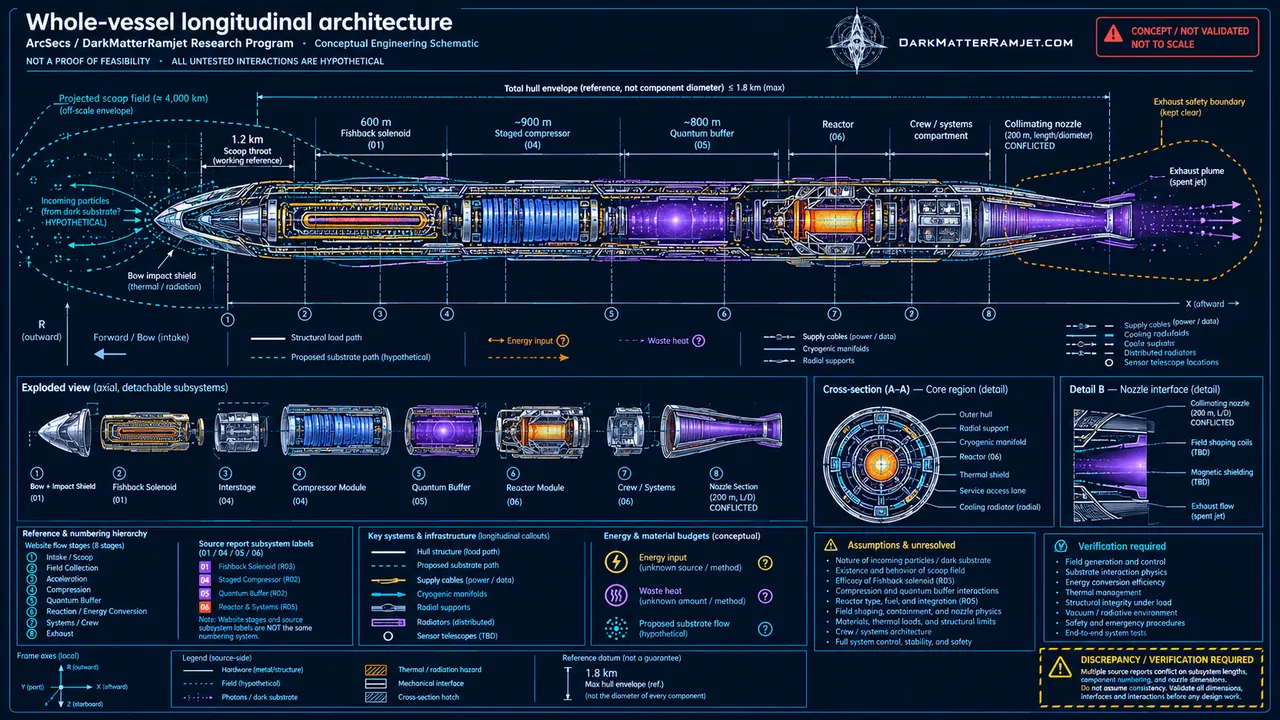
Whole-vessel systems overview
A single visual map of the proposed vessel and its principal functional sections, from the forward collector to the aft exhaust.
Study components and limitations →Browse every supplied blueprint, trace each proposed subsystem and open the complete resolution drawing with notes on physics, integration and unresolved specifications.
All 19 drawings are available below.
How the full architecture fits together on paper.
OPEN SCHEMATIC ↗
A single visual map of the proposed vessel and its principal functional sections, from the forward collector to the aft exhaust.
Study components and limitations →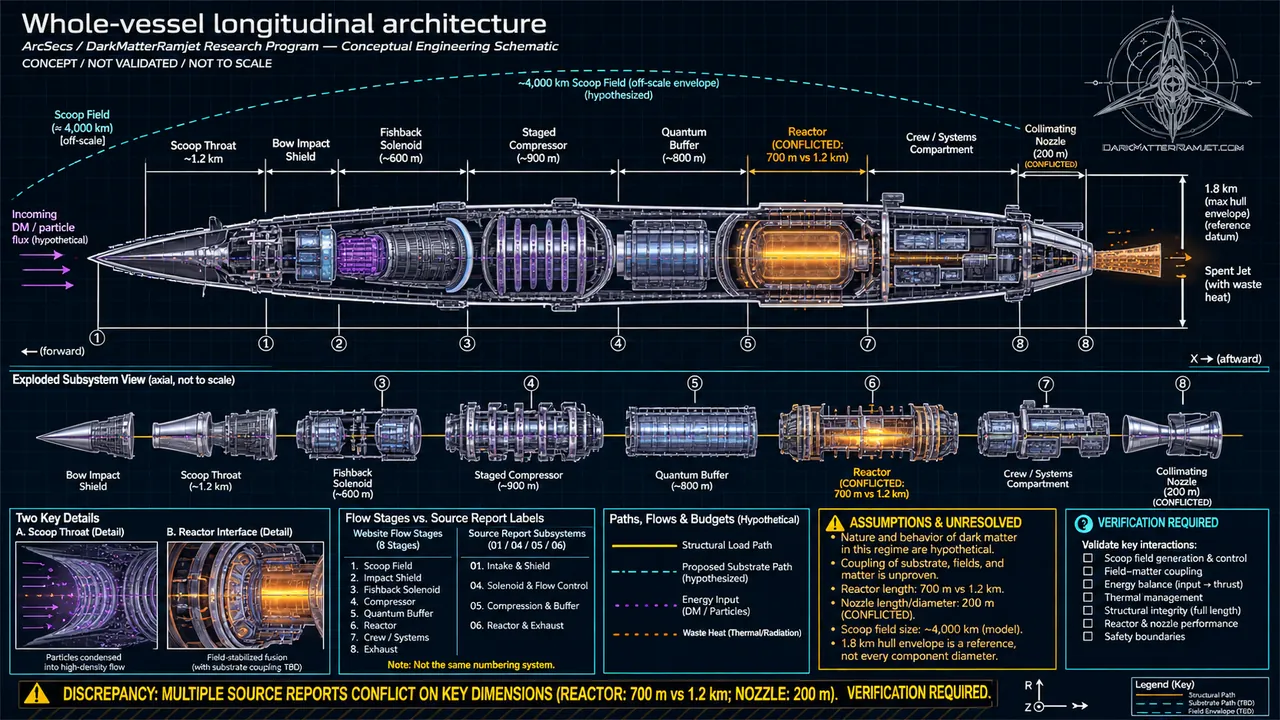 OPEN SCHEMATIC ↗
Longitudinal engineering-concept plate showing the nominal sequence of the complete ramjet and the relationship between major flow regions.
Study components and limitations →The intake-to-exhaust sequence. Two views are available for the shield and for exhaust.
 OPEN SCHEMATIC ↗
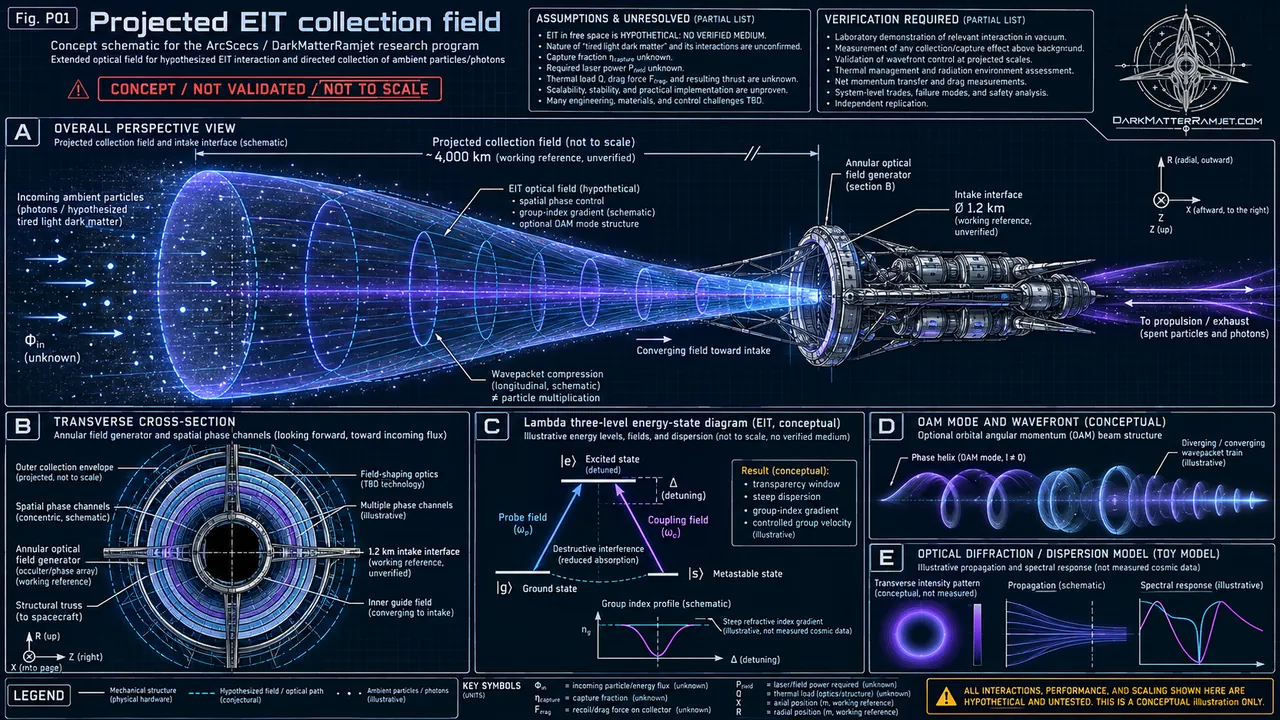
The forward capture concept proposes a field thousands of kilometers across that guides extremely dilute, hypothetical dark-substrate excitations toward a smaller throat.
Study components and limitations →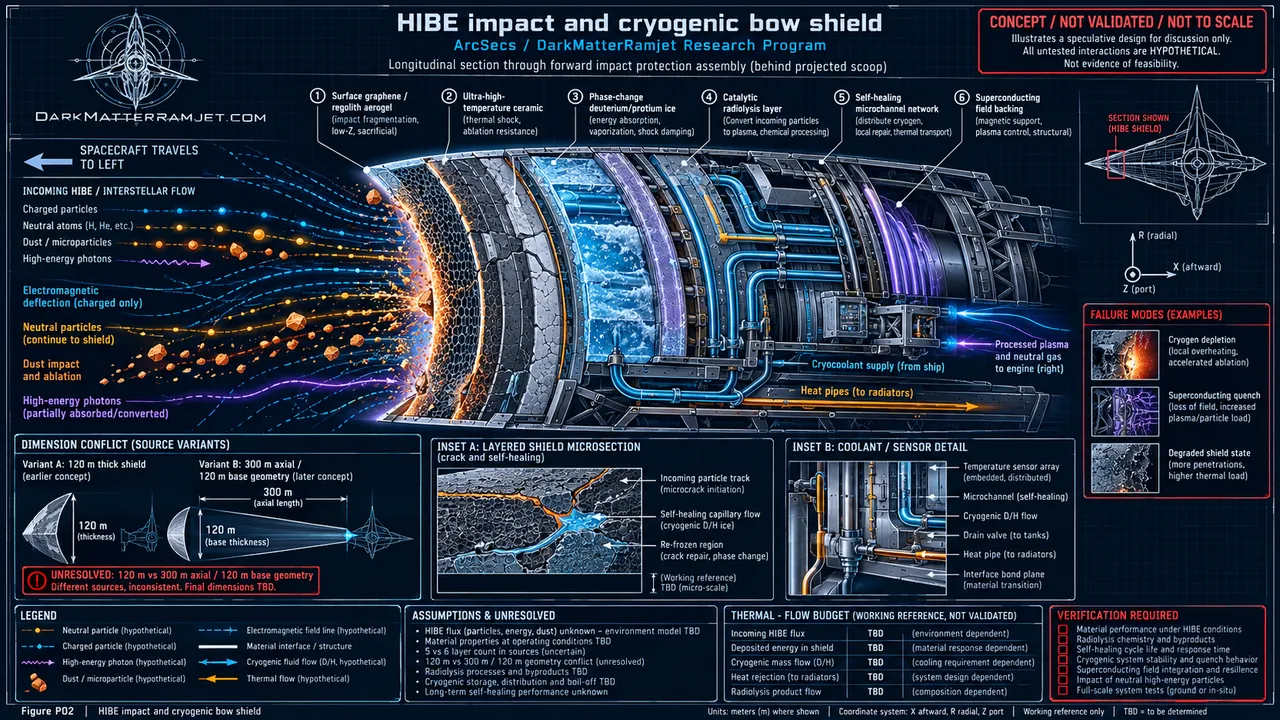 OPEN SCHEMATIC ↗
A forward impact-protection concept combining sacrificial material, cryogenic layers, repair circulation and magnetic interfaces.
Study components and limitations →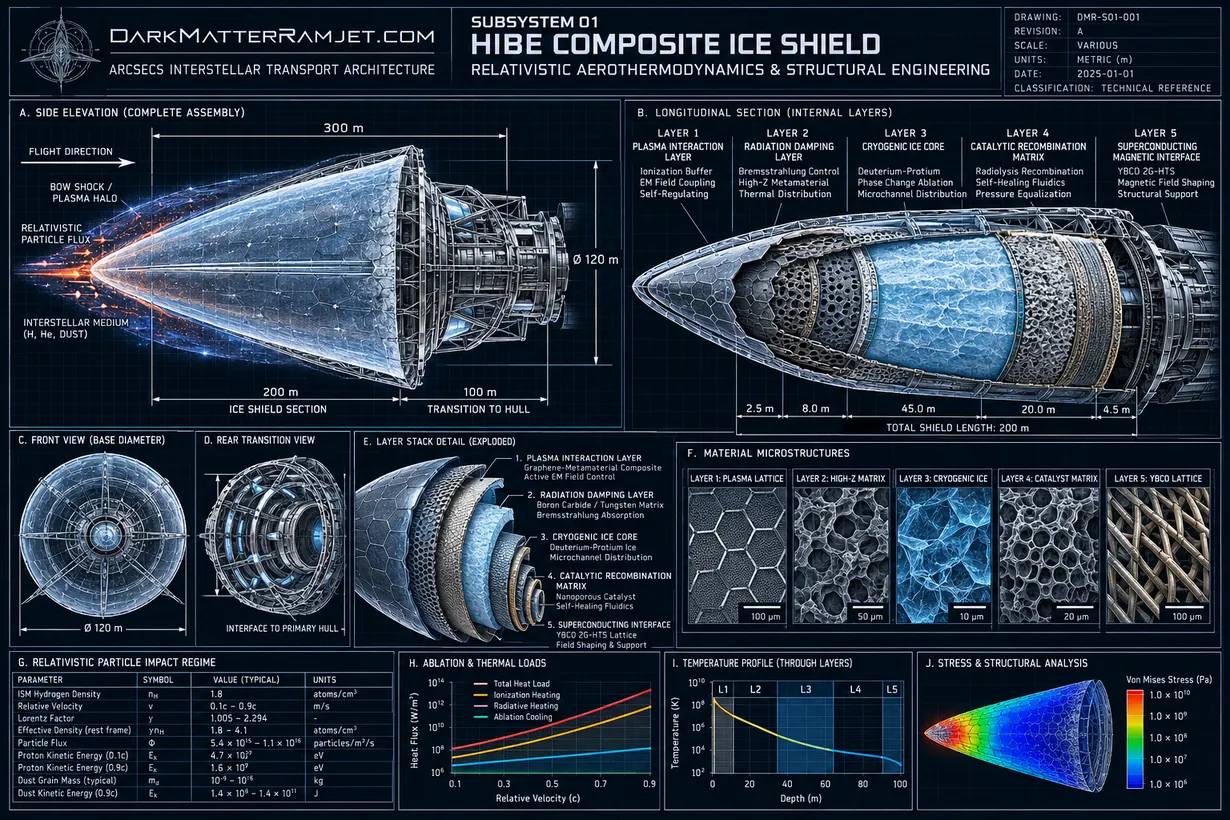 OPEN SCHEMATIC ↗
An alternate HIBE plate emphasizing material microstructure, cross-sections and illustrative particle-impact and thermal plots.
Study components and limitations →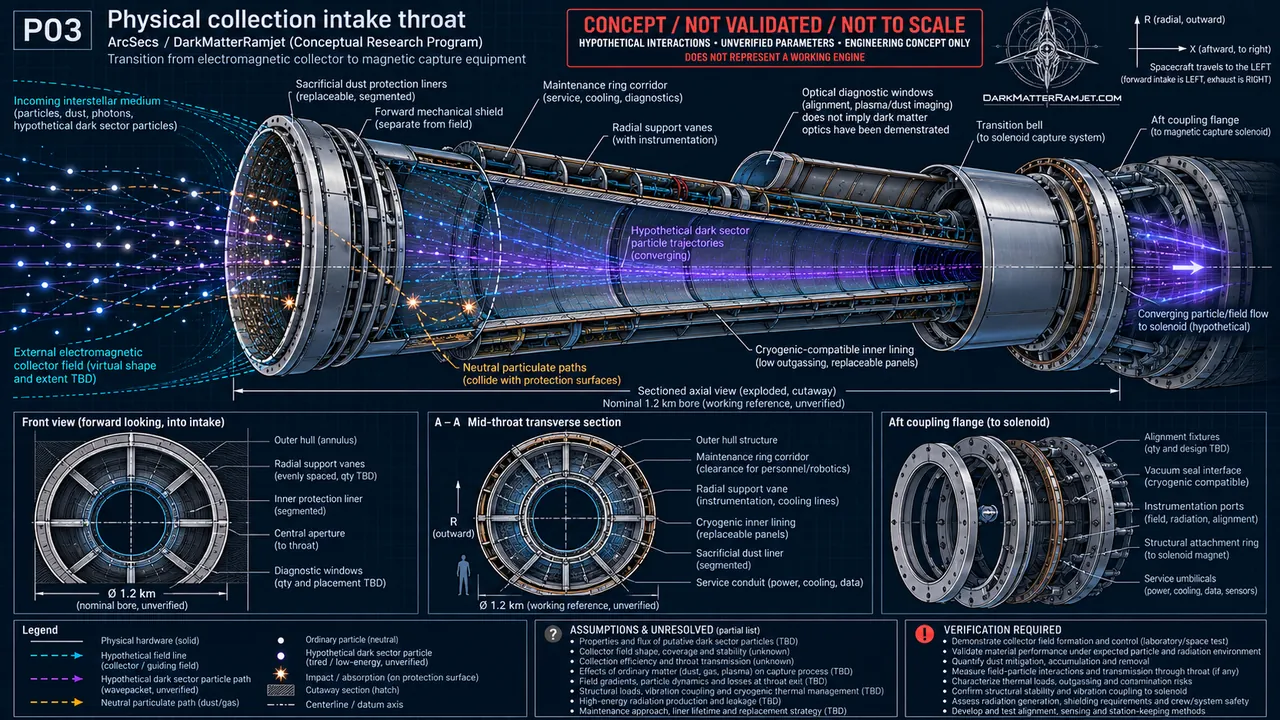 OPEN SCHEMATIC ↗
The spacecraft-side entry aperture funnels already-directed substrate flow into controlled magnetic transport hardware.
Study components and limitations →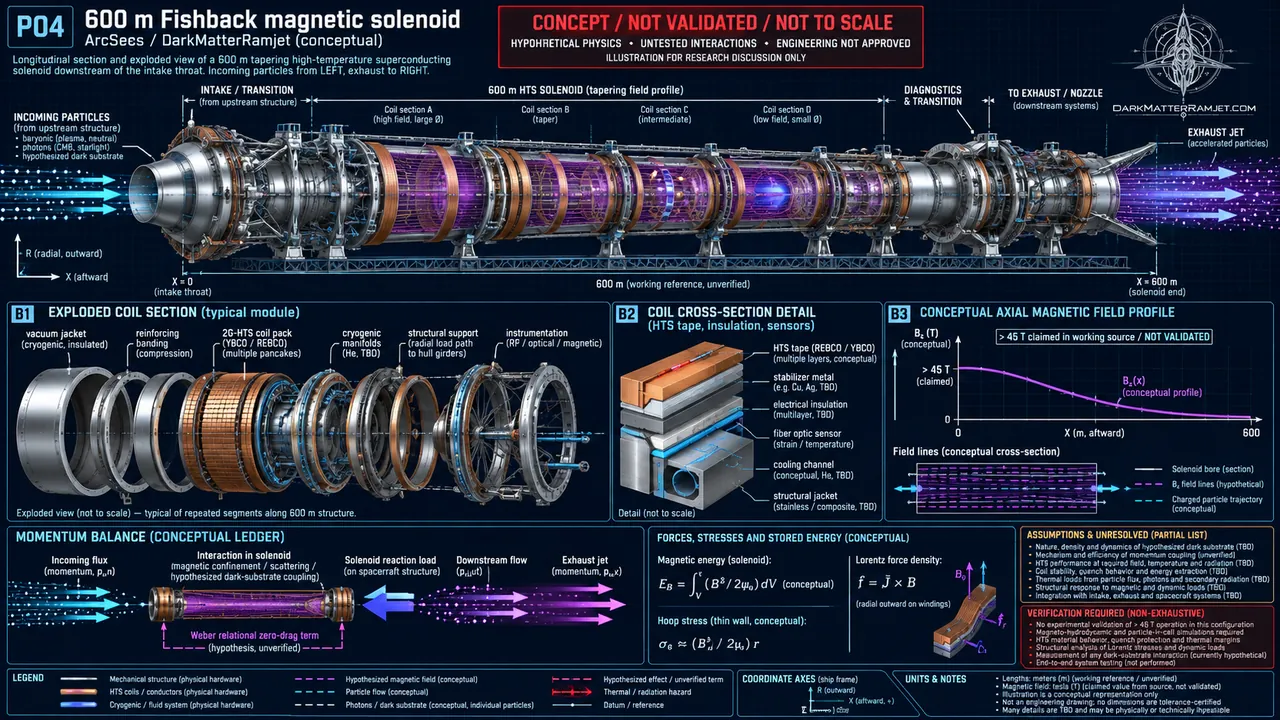 OPEN SCHEMATIC ↗
The proposed approximately 600 m magnetic transport section seeks to shape trajectories and manage intake drag.
Study components and limitations →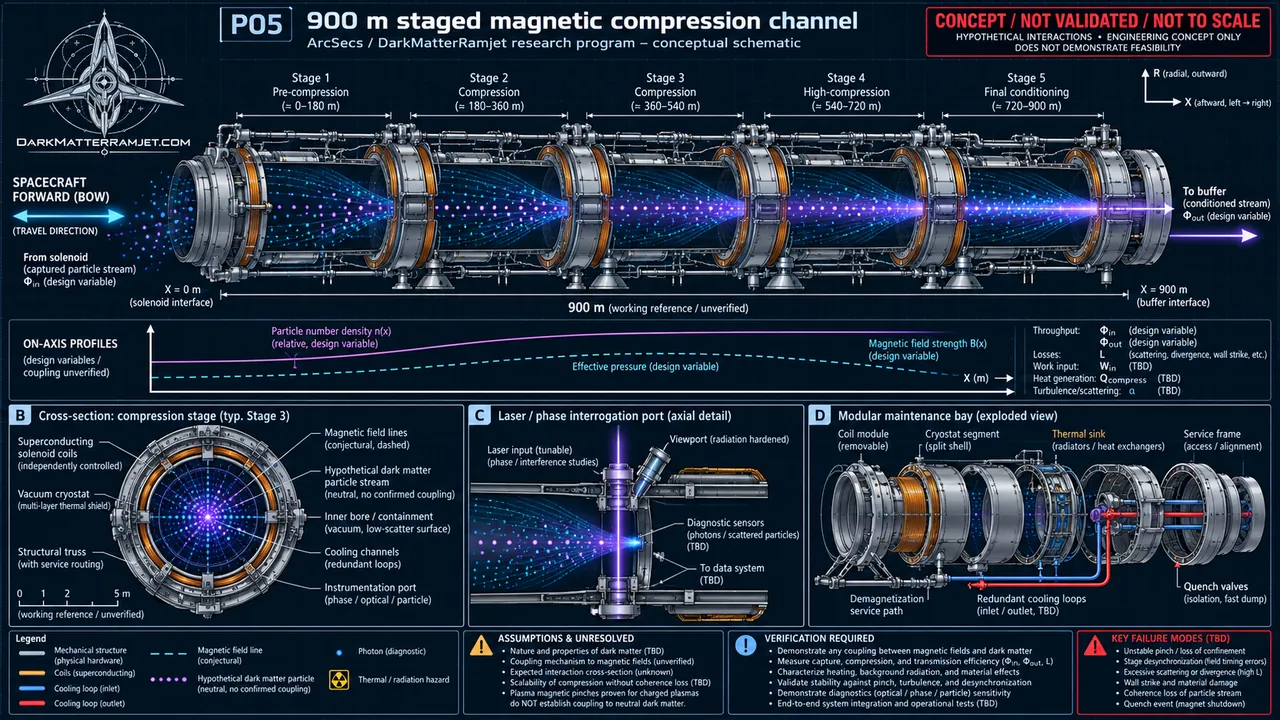 OPEN SCHEMATIC ↗
A sequential electromagnetic stage intended to increase the density of an incoming hypothetical medium before storage.
Study components and limitations →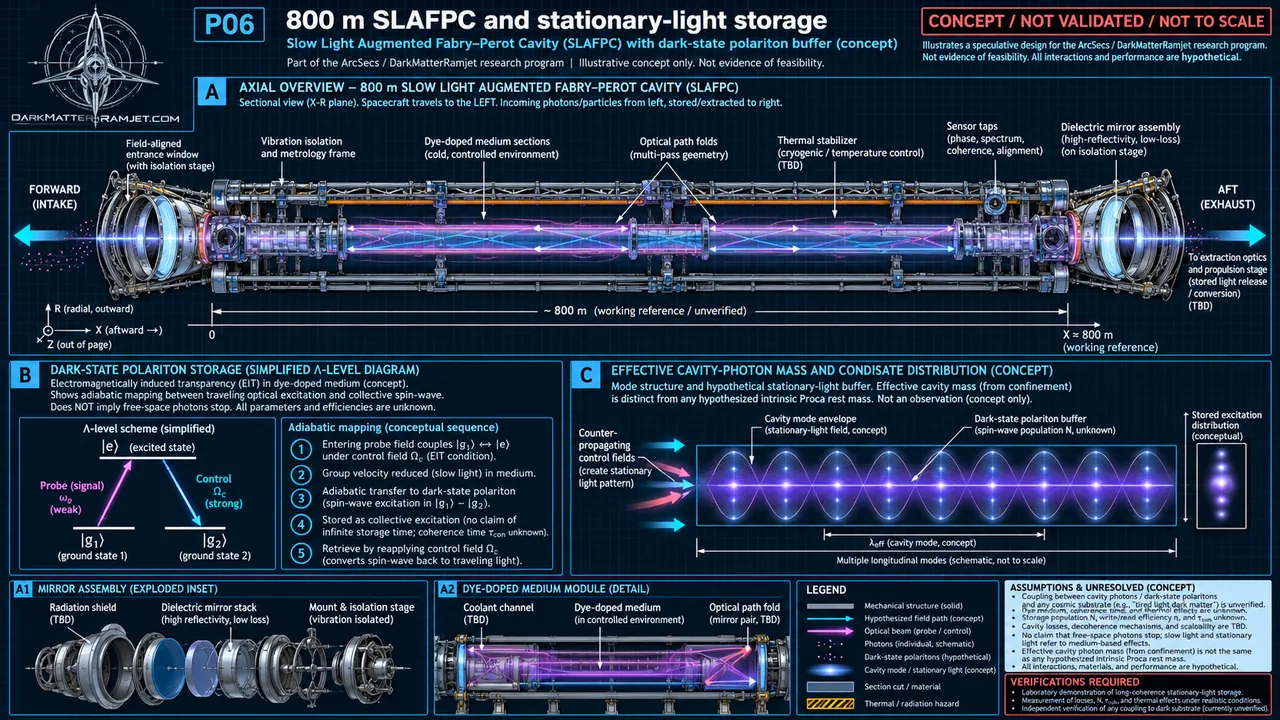 OPEN SCHEMATIC ↗
An approximately 800 m quantum-optical holding section inspired by photon trapping and dark-state polariton storage.
Study components and limitations →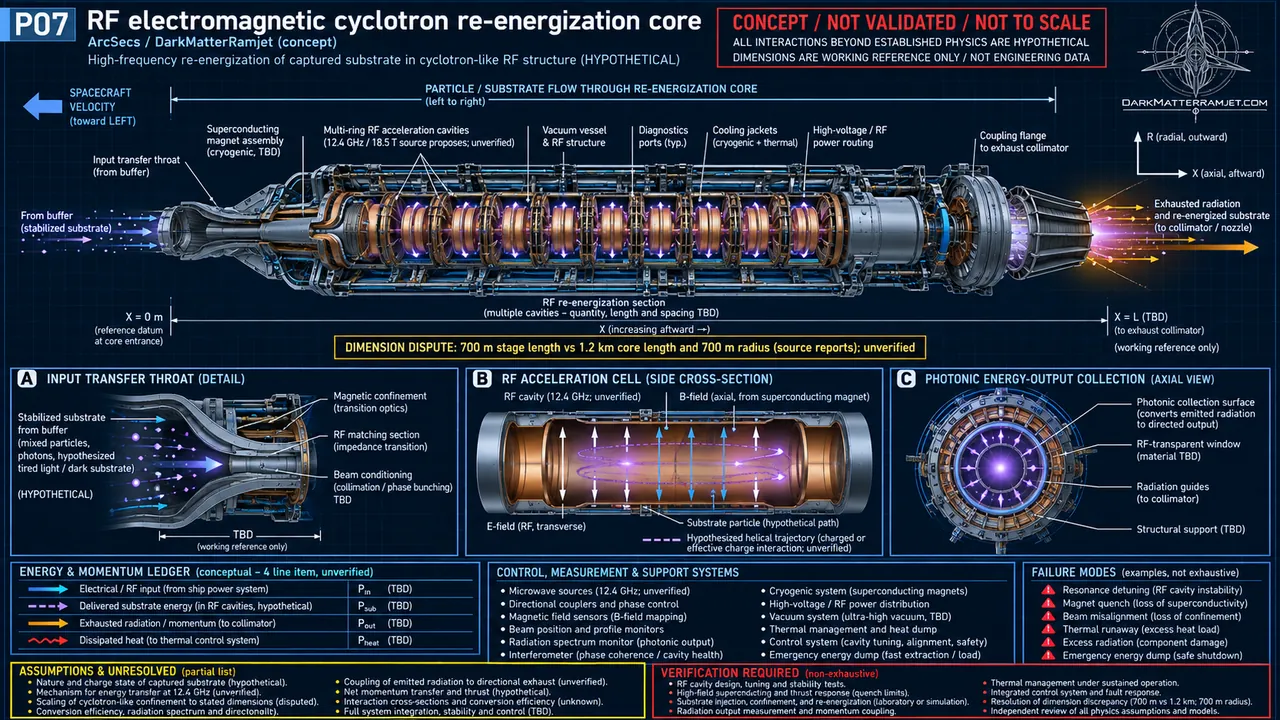 OPEN SCHEMATIC ↗
The envisioned reactor adds energy to stored substrate and prepares a high-momentum output stream for the nozzle.
Study components and limitations →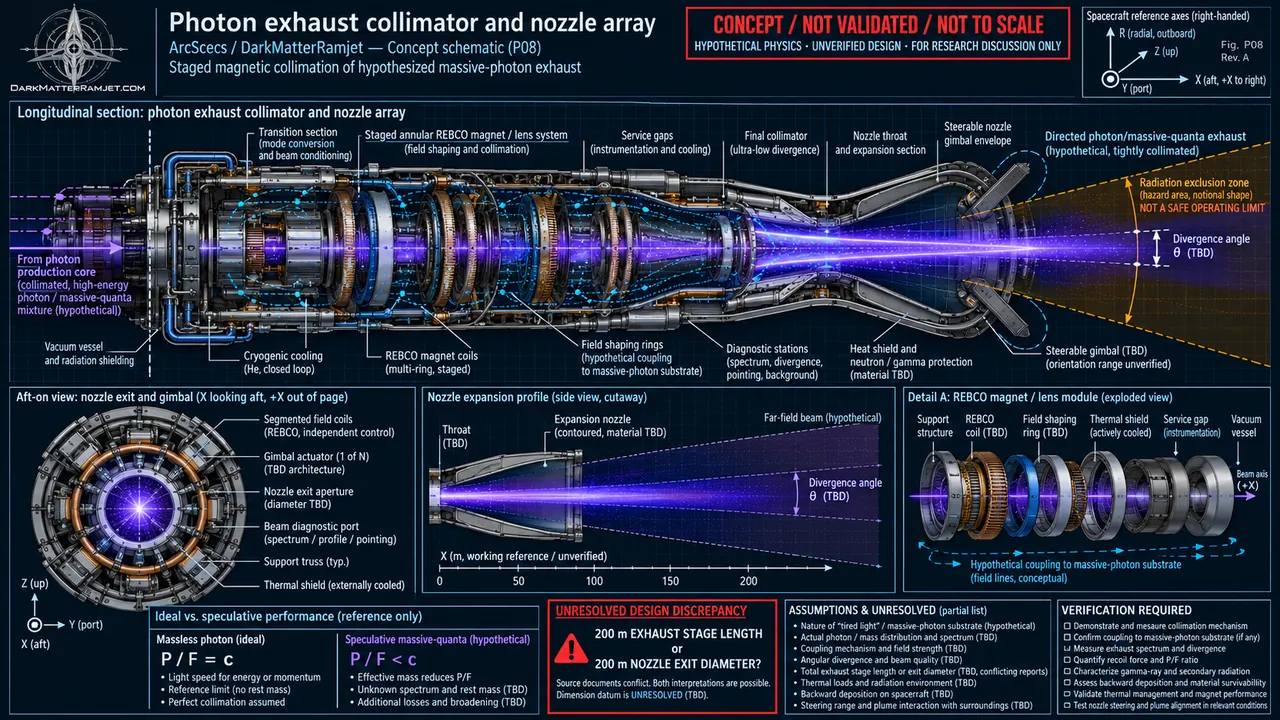 OPEN SCHEMATIC ↗
A close-up of the aft structure designed to turn energetic output into a directed momentum flux.
Study components and limitations →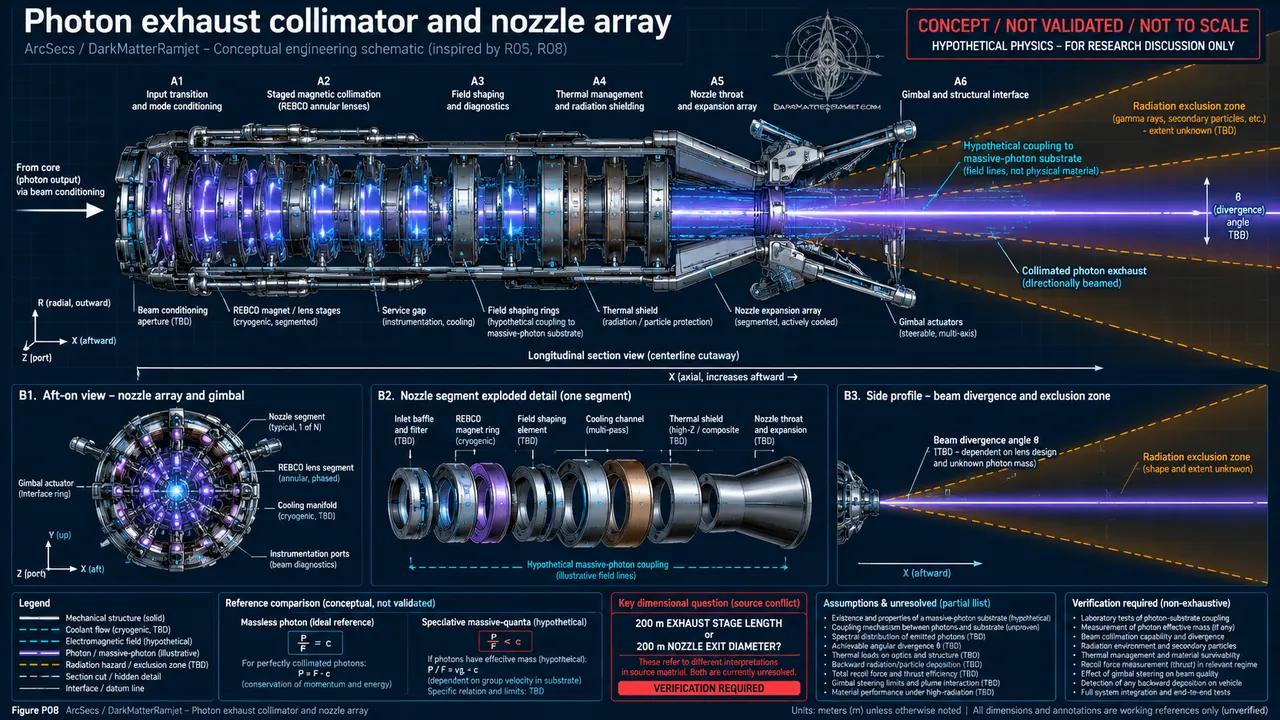 OPEN SCHEMATIC ↗
A broad operational view of the aft nozzle, flow-conditioning rings and diverging directed exhaust.
Study components and limitations →The sensors, thermal systems, attitude control and power infrastructure surrounding the engine.
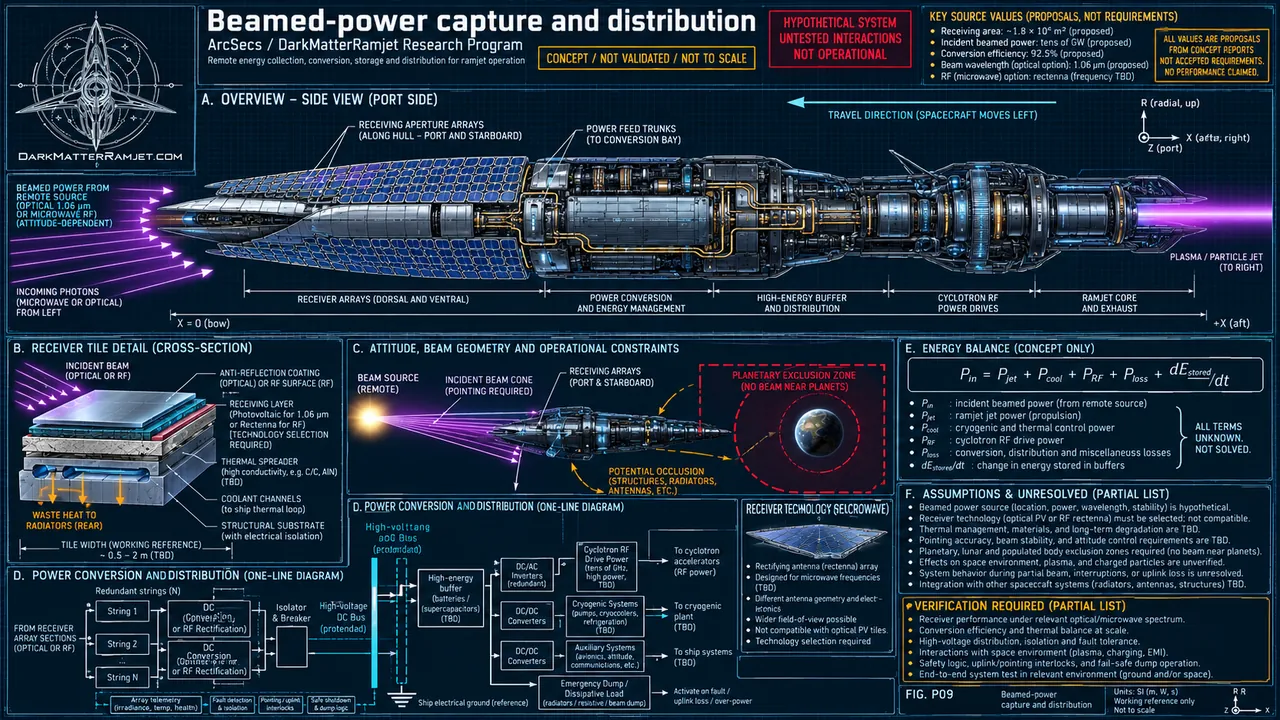 OPEN SCHEMATIC ↗
Conceptual spacecraft power intake, rectenna or optical receiver, and distribution to high-field engine stages.
Study components and limitations →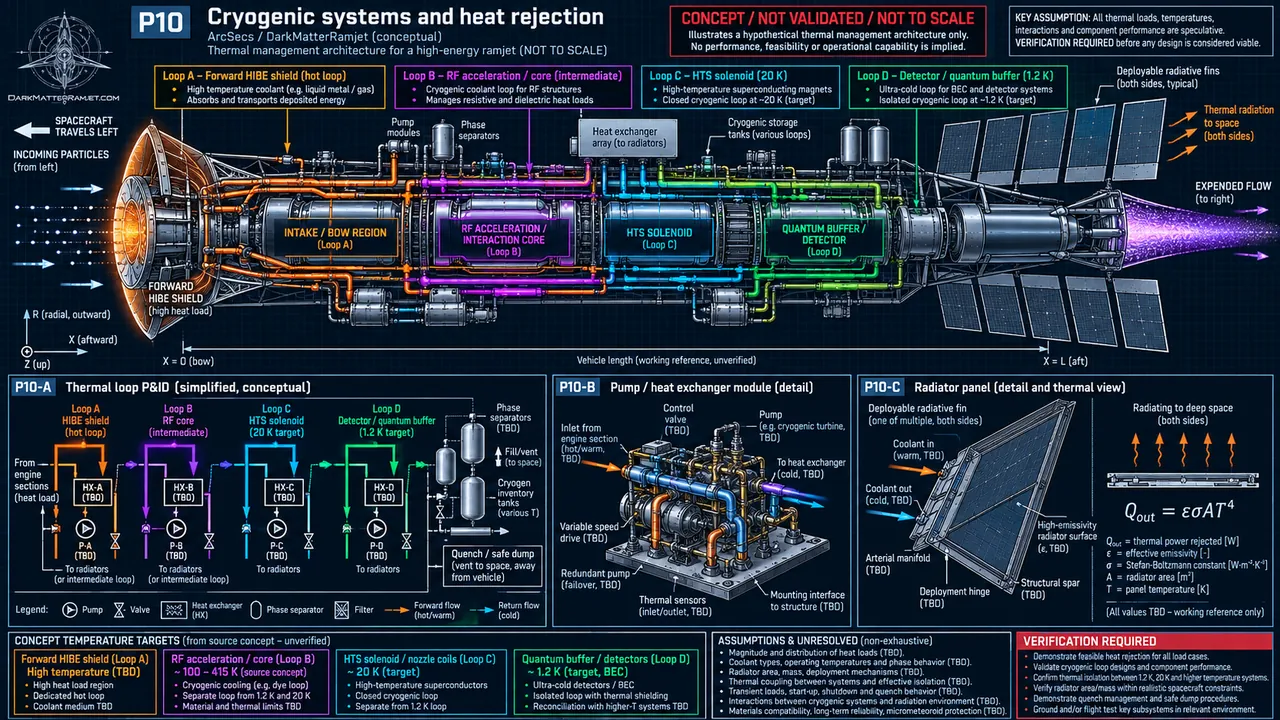 OPEN SCHEMATIC ↗
A distributed thermal-control study for superconducting windings, cold photon storage, shielding and power electronics.
Study components and limitations →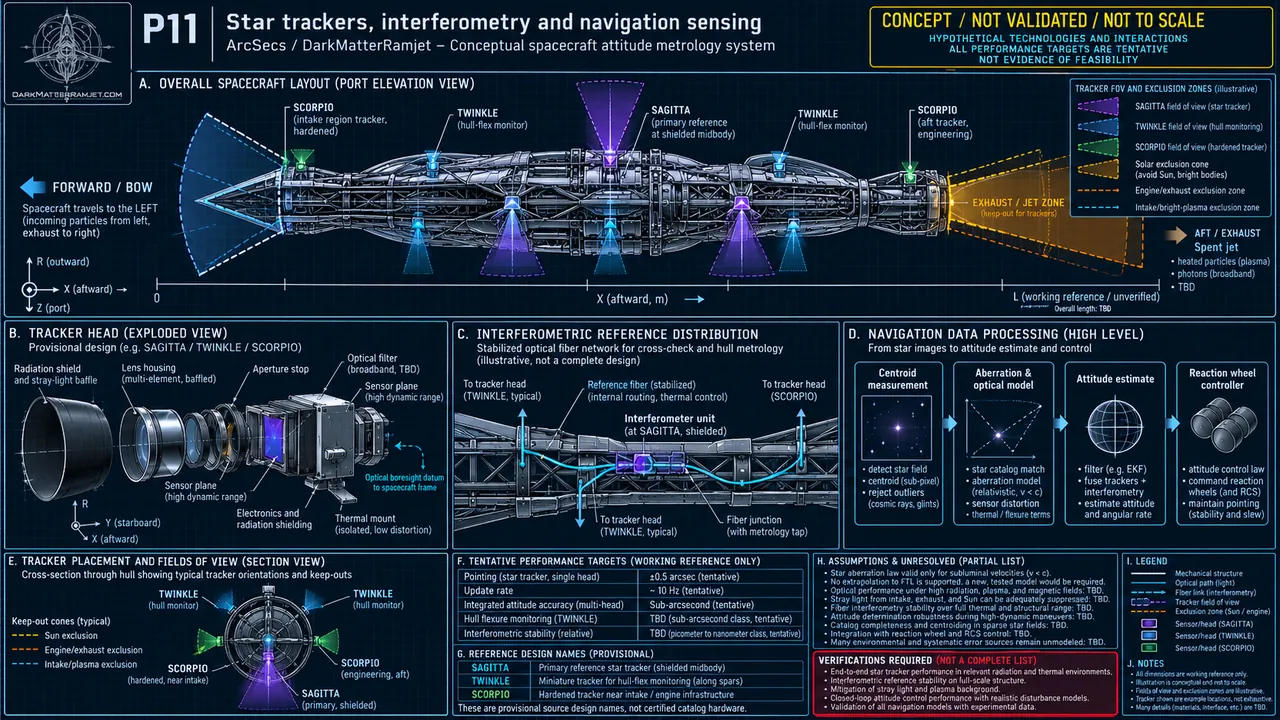 OPEN SCHEMATIC ↗
Precision position and attitude sensing across a hypothetical high-speed transit envelope.
Study components and limitations →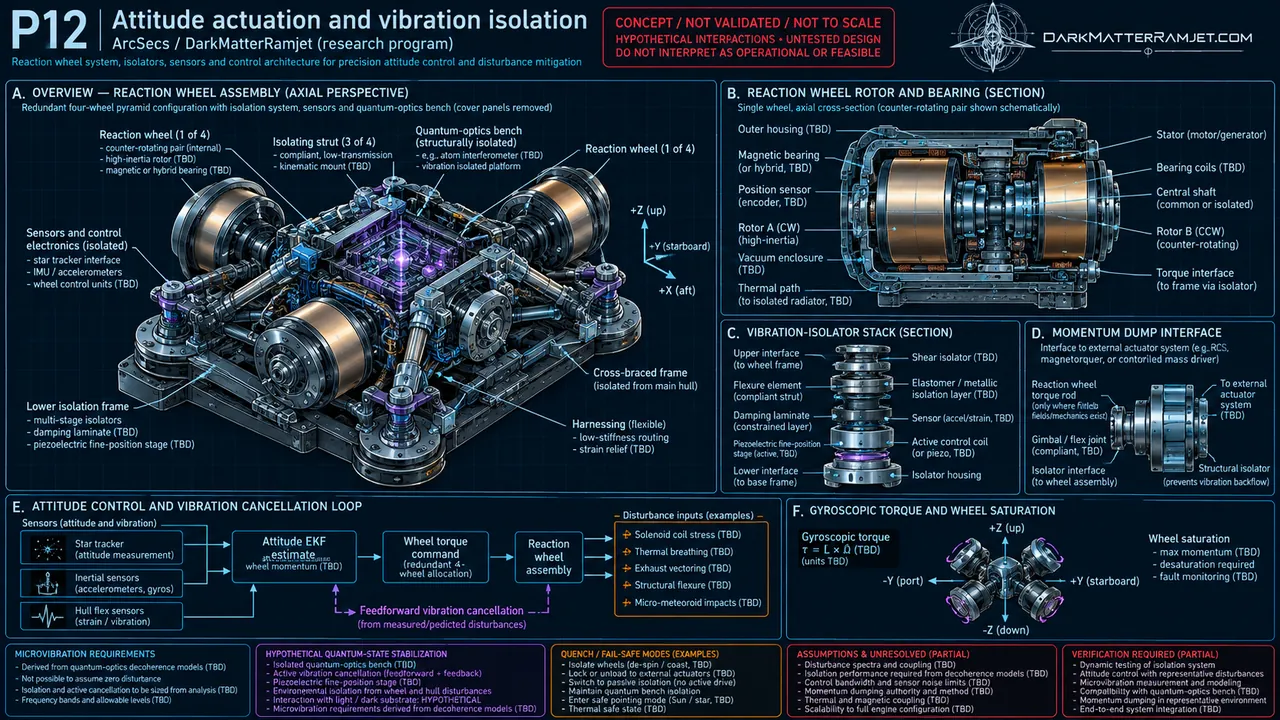 OPEN SCHEMATIC ↗
A proposed pointing and stabilization infrastructure keeping the collector, beam receiver and exhaust coaxial.
Study components and limitations →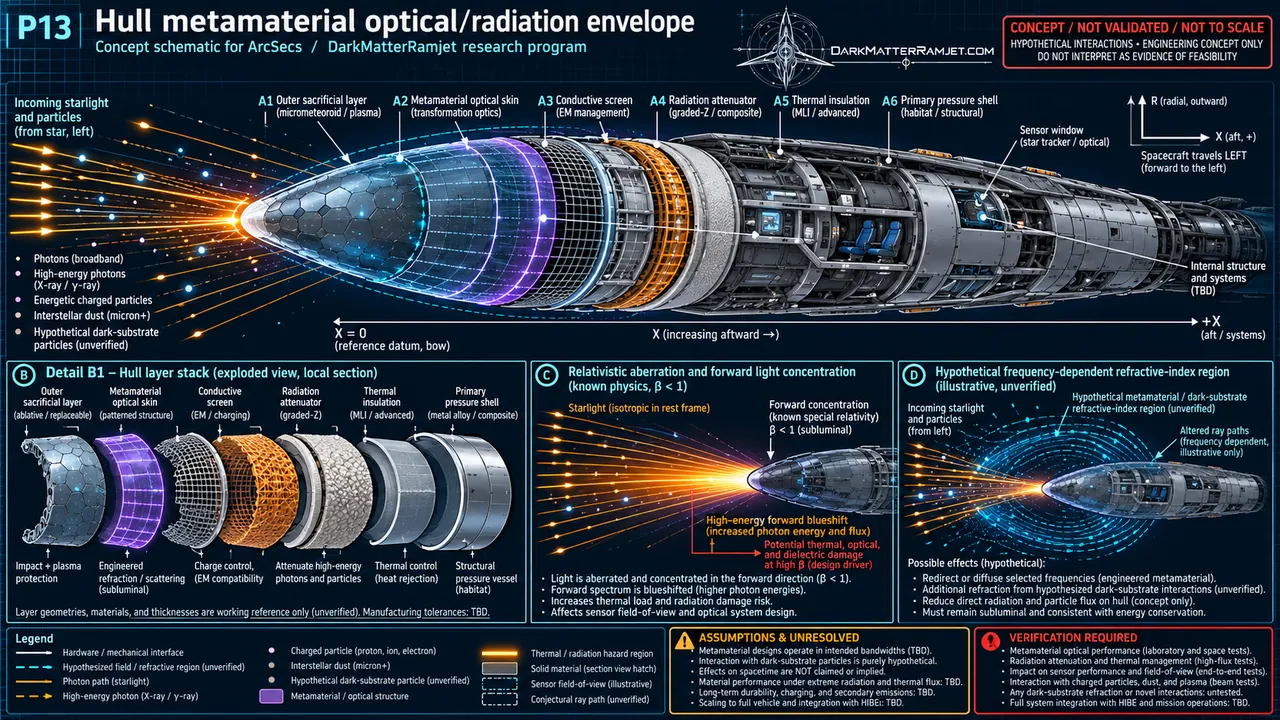 OPEN SCHEMATIC ↗
A longitudinal view of speculative hull coatings, sensor shielding and possible optical distortions around the moving craft.
Study components and limitations →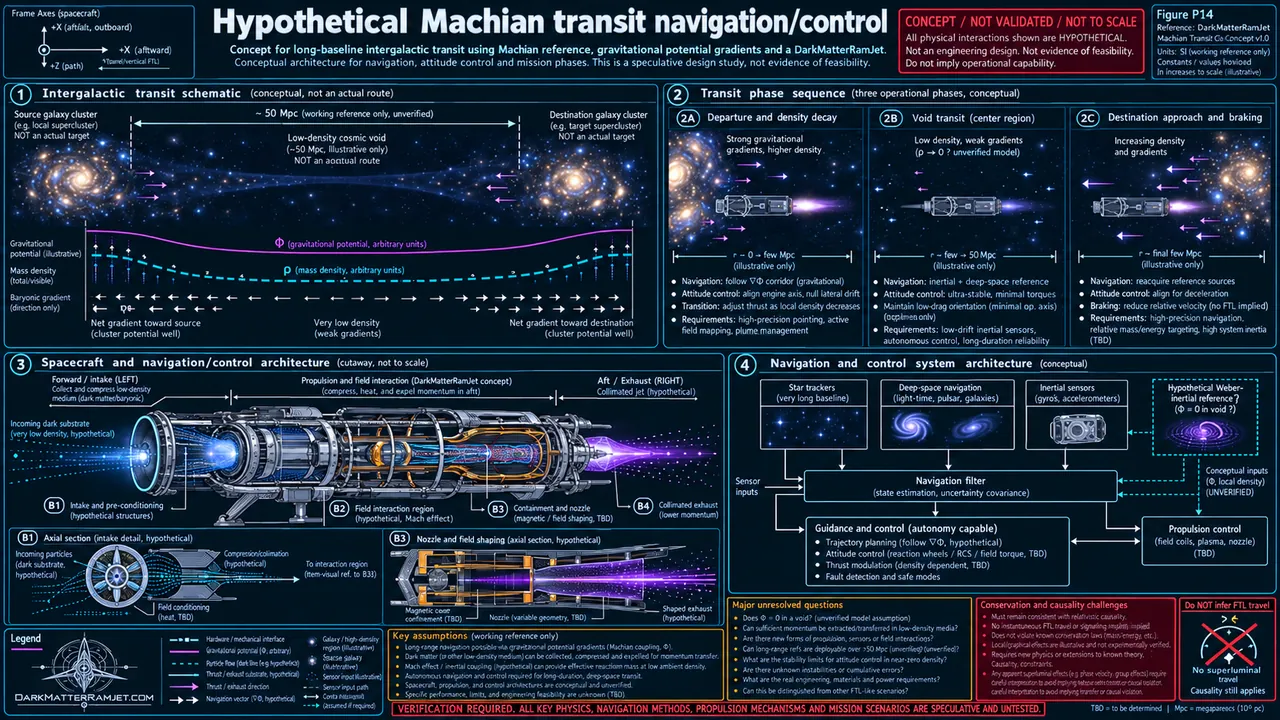 OPEN SCHEMATIC ↗
A navigation and trajectory plate depicting the hypothesis that effective inertia might change in sparse intergalactic space.
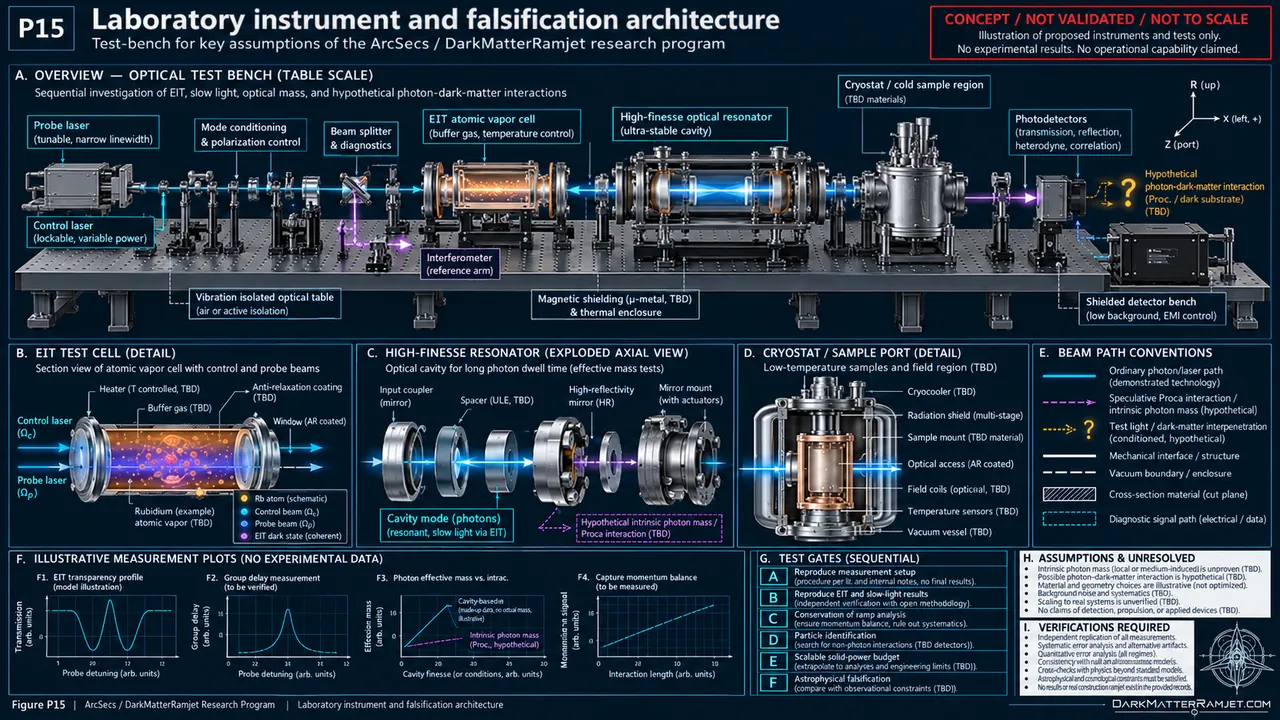
Study components and limitations →What could be measured—and what must still be falsified.
 OPEN SCHEMATIC ↗
A verification-oriented schematic that separates testable optical and electromagnetic phenomena from hypothetical interstellar propulsion behavior.
Study components and limitations →The underlying project proposes massive-photon dark matter, vacuum-scale EIT, a capture-and-re-energization engine and high-speed relational travel. These claims are not experimentally demonstrated. Some component dimensions in the supplied studies conflict; details pages identify those limits.
Read the validation roadmap →Rule-based guide. No experimental claims or AI model calls.